
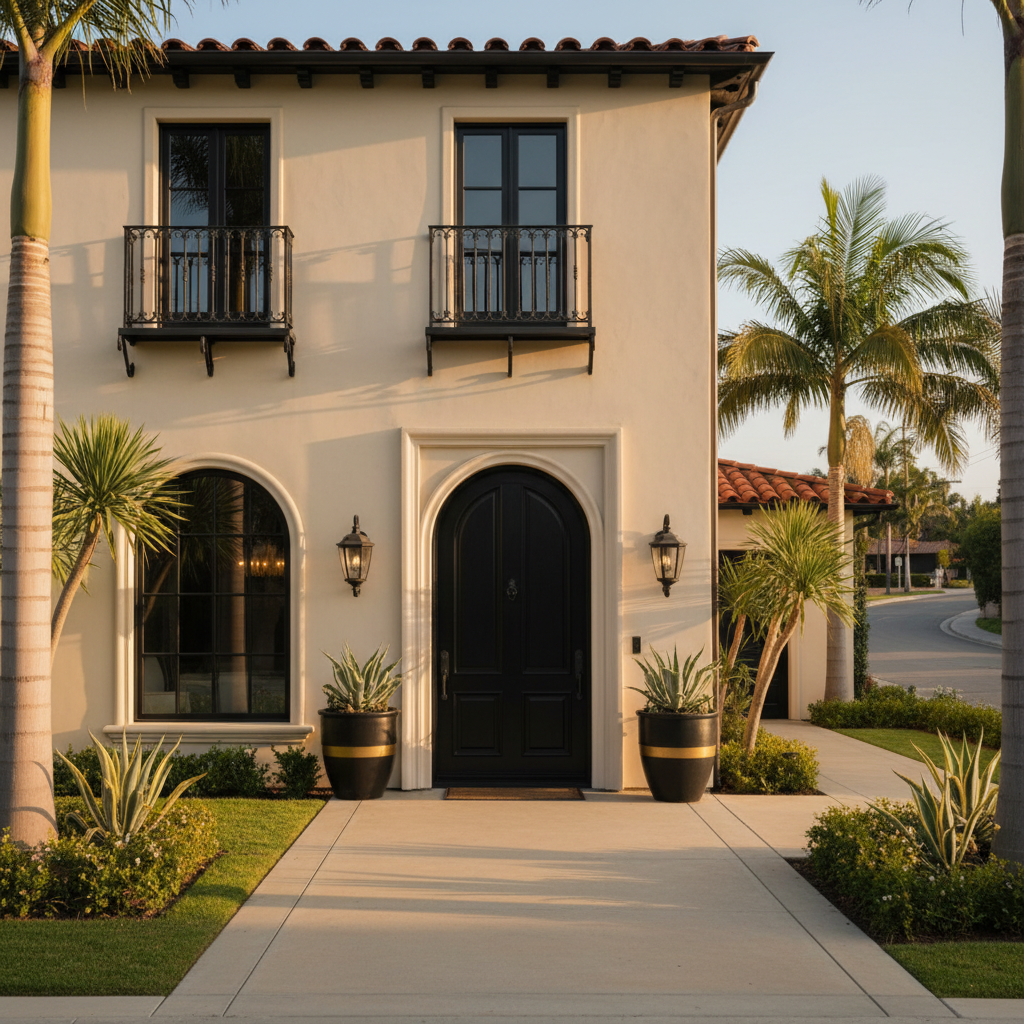
If you were named an executor or administrator handling real property in Los Angeles County, the legal procedures dictate your timeline, pricing, and paperwork long before an escrow officer opens a file. When selling a house in probate California personal representatives must balance statutory court rules with fiduciary exposure to heirs and beneficiaries.
Here is what we tell every seller who asks us this: the single legal detail that determines your entire transaction is whether your Letters of Administration grant you full authority or limited authority under California's Independent Administration of Estates Act (IAEA).
Knowing this distinction early prevents expensive delays, disputes among heirs, and potential court reprimands.
Full Authority vs. Limited Authority When Selling a House in Probate California
When you petition for probate, the court assigns your operational power over estate assets. This classification establishes whether you can sell on the open market like a standard transaction or if you need formal judicial oversight.
- Full authority under the IAEA: As the personal representative, you can accept an offer, negotiate terms, and close the sale without a judge confirming the transaction. According to California Probate Code §§10580 and 10586, you are generally required to serve a formal Notice of Proposed Action to all entitled heirs and beneficiaries at least 15 days before the scheduled action date. If no heir objects within that 15-day window, you proceed to closing.
- Limited authority (or estates without IAEA powers): Under California Probate Code §§10308 and 10503, the property sale cannot transfer title until it is formally reported to and confirmed by the probate court. You must market the property, secure a qualifying purchase contract, and then wait for an assigned court confirmation hearing.
We walk our clients through this before we list so expectations are set upfront. If you are preparing an inherited property and need to understand where your estate stands in the process, explore our specialized guidance for selling estate property across the region.
The Court Confirmation Process, Overbids, and Valuation Rules
When court confirmation is required, the transaction follows strict statutory formulas designed to protect the financial interest of the estate and its beneficiaries.
The transaction must satisfy three core legal benchmarks:
- The 90% appraisal benchmark: Under California Probate Code §10309, the accepted purchase contract generally must be at least 90% of the probate referee’s appraised value, and that appraisal generally must have been completed within one year prior to the confirmation hearing. If the estate's inventory and appraisal has not been filed, or if property condition issues have eroded its market value below that threshold, the court cannot confirm the sale until a revised appraisal or corrective action is taken.
- The mandatory overbid formula: At the court confirmation hearing, the judge opens the floor to courtroom bidders who want to outbid the original buyer. Pursuant to California Probate Code §10311, the first courtroom overbid must exceed the initial contract price by 10% of the first $10,000 plus 5% of the remainder. For example, on a $900,000 accepted offer, the first legal overbid must beat the contract by at least $45,500 ($1,000 + $44,500), bringing the opening courtroom bid to $945,500.
- Court deposits and bidding terms: Overbidders in court are typically required to present qualifying funds, such as a cashier's check deposit, and adhere to specific court rules regarding purchase terms and contingencies.
Navigating court hearings requires an experienced listing team that understands how to work alongside your probate attorney while properly marketing the property to prospective buyers through our greater Los Angeles real estate agent network.
Real Timelines, Holding Costs, and Common Estate Mistakes
Many executors mistakenly assume every probate sale takes the exact same amount of time. In practice, probate timelines vary widely based on court calendar congestion, heir alignment, and administrative complexity. While formal probate administration typically spans 9 to 18 months or longer depending on the circumstances, California law does not impose one rigid calendar for all estates.
During this administration window, the estate remains responsible for mounting carrying costs:
- Ongoing mortgage payments and delinquent property taxes
- Specialty vacant-property hazard insurance
- Utility maintenance, security, and garden upkeep
- HOA fees, assessments, or deferred maintenance repairs
The most damaging mistake executors make is misunderstanding fiduciary disclosure exemptions. Personal representatives who have not occupied the property are often exempt from completing certain standard seller disclosure forms, such as the Real Estate Transfer Disclosure Statement (TDS). However, this fiduciary exemption does not cover every situation, and personal representatives remain obligated to disclose known material property defects and conditions to prospective buyers.
Another frequent misstep is spending personal cash out of pocket on cleanouts or cosmetic renovations before the estate account is funded. Cuington & Co Estates eliminates this friction by offering concierge renovation and staging with zero upfront cost to the estate—our team covers the staging and project management expenses directly, which are settled at closing out of escrow proceeds.
Because every estate carries a unique combination of title status, heir dynamics, and maintenance needs, an off-the-shelf checklist is never enough. To see where your inherited home stands in current market terms, get a free personalized home valuation tailored to estate properties.
Whether your letters grant full IAEA authority or require court confirmation, working with a Certified Probate Expert safeguards your fiduciary responsibilities while optimizing net proceeds for the estate. At Cuington & Co Estates, Corry Cuington (CA DRE #02014388, Certified Probate Expert) and Allison Ulloa-Cuington (CA DRE #02216483) provide end-to-end guidance from referee appraisals through final distribution. Reach out directly to Corry at 310-972-0523 or Allison at 310-227-4694, or contact our team to map out your next steps.